Tuesday, January 29, 2019

Nigel Thornberry Post Week 2

Shot by Rose Marie Cromwell
Written by Lauren Du Graf
        These photos were interested to me because I'm currently looking for inspiration for photos involving portraiture and music. These are women of Jazz. Looking at the first you may not get that they're women of jazz, but with the writing by Lauren Du Graf helps paint a better picture. I begin to see and feel the vibe of jazz when I notice the colors and the smoothness in the culture of cuban Jazz. The photos are showing these Cuban women with vibrant colors in very smooth appealing settings. The first photo makes me think that Cuban Jazz is smooth like water and popping like the color of her lips along with her blouse. The second photo is showing a beautiful Cuban woman paired with a bright, Smooth, vibrant background item. Cromwell pairs some of the women with other photos involving nature.

Photos by Lyle Ashton Harris
Written Andrea K. Scott
           Lyle Harris has an interested way of shooting portraits. For these shots he uses African masks with a red glass or mirror. Some of his photography are portraying models in the nude while wearing the mask, which is kind of the opposite of what society in the U.S. thinks the order should be with the body covered and face uncovered. The red glass is interesting for me because the red catches my eye then my brain starts to wonder why. The portraits are definitely interesting with the mask and nudity but the red glass just add a different level and brief change and splash of color. The light that the glass gives off really works for him in this shoot. I get a feeling that there is a danger in the wilderness looking at these shots.

Nigel Thornberry Blog Post #1

Chloe Jafe
       Emma Lewis writes about Chloe Jafe's I Give You my Life. She begins by discussing how Jafe captures women of the Yakuza and other powerful images of the subculture. The tattoos made the women feel powerful and independent. Their husbands had them and some wives didn't have any. The women wanted to feel something, and the ink supplied that feeling for them. Jafe had to gain trust and earn her way to the wife of the family boss. Jafe's photos that I have chosen are really powerful in the sense of the women getting the tattoos and where the influence they get it from. I like the photos because they do show emotion with unity, and at the same time shows the woman as an independant looking fierce wearing just tattoos of the culture.


Meera Sulaiman,
        Her interaction with animals are amazing. A brave human being she is for going up to what some would consider dangerous beings, even though some are behind cages or glass. The underwater picture of the bear is just astonishing capture of the moment. The editing and composition of the person in the dark separates this picture from being an ordinary picture taken at the zoo. This picture make you feel like you're there and start to question could I be in danger, but notice that its a beautiful moment in all. The picture with the smaller creatures is an adorable shot and thought using a smaller human, with a smaller animal. Sulaiman shows the viewer the attention that all beings featured are giving. The kid shows the animal a toy and the photo portrays that the animals are intrigued and allows the viewer to place dialogue if we wanted. Sulaiman uses the animals and human interaction to point us somewhere in these two photos using eyes or fingers or even paws.


Sunday, January 27, 2019

Mia-Myline Medina_Ole Marius Joergensen/Nadia Lee Cohen_Week #2

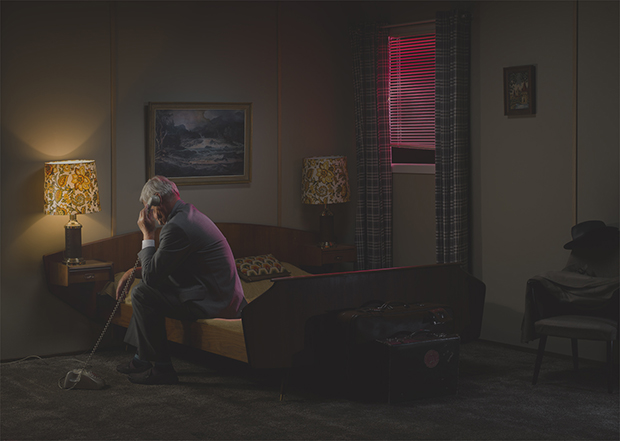
Ole Marius Joergensen, a Norwegian photographer, in his photo-series "Vignettes of a Salseman," follows the journey of a fictional salesman through staged somewhat photographs. Joergensen, with the help of his uncle who is depicted as the salesman, traveled for hours with his uncle to find the perfect locations at the perfect times in order to create these scenes. Much of Joergensen's work utilizes vintage style which I find perfectly compliment the Norwegian landscapes. What drew me to this series and photographer in particular is the simplicity of the imagery and the clear story telling of the series. Though story telling is not something I'm particularly interested in, it is done well and the tone of loneliness coupled with the mystery of the man- not to mention the vintage style- is alluring to me.


https://www.featureshoot.com/2019/01/photos-of-a-lonesome-and-imaginary-salesman/


Nadia Lee Cohen, graduate of the London College of Fashion, combines heavily saturated colors with over-the-top hair, makeup, and clothing to produce eye catching images. Many of the photos utilize an array of different prints and patterns to create which may almost come off as tacky and off putting to some, but are pleasantly interesting to me. I'm inspired by the scene set-ups, but most importantly, I am inspired by the different perspectives used in each photo.
Warning: (link) NSFW


https://www.featureshoot.com/2012/12/outlandish-fashion-shoots-perfectly-combine-modern-and-vintage-style/


Taylor Quinley Blog Post #2

This week I chose to write about John Szarkowski’s thoughts on Robert Frank’s Book ‘The Americans.’ This photographic book was influential in postwar American photography. Frank was known to use unusual focus, low lighting and cropping that deviated from the ideal photographic techniques. The reason I chose this because in the article it talks about how many of the viewers hated this series because it wasn’t your traditional idea of what good photography was. I think this was an excellent read, though short, because it shows that it is okay to step out of that box. I think that with the project I am working on this semester, this was an article that I needed to read seeing as though my project will probably not fall into the category of everyones ideal photography styles. 


http://www.americansuburbx.com/2013/05/john-szarkowski-on-robert-franks-book-the-americans-1986.html


Mia-Myline Medina_Jen Davis' Self-Portraits_Week #1: Part 2

New York based photographer, Jen Davis, has been working on self-portraiture for over a decade as she highlights the topic of body image and beauty. Her portraits in the series Eleven Years, follow her perception of her body as it changes over time. The images are not documentary style, but staged in a way that reflects reality. Throughout the years, men have been added to the series- adding a sensual aspect to the project- though the topic and style have remained consistent. I hope to reflect some aspect of reality in my journey through self-portraiture as well. Looking at the these photos has reminded me that it is important to reveal emotion and welcome intimacy as an inevitable aspect of self-photography.

 Untitled No. 39
 Untitled No. 66

http://flakphoto.com/content/self-portraits-jen-davis-hannah-frieser#photo-1


Thursday, January 24, 2019

Elena Simon Post #2

https://www.lensculture.com/articles/rafael-soldi-reflecting-on-childhood-aggression-and-intimacy-at-the-playground

For this entry, I was attracted to the work of Rafael Soldi. His photography shows many levels of intimacy as he looks back on his roots and identity. This collection is so personal to him and the interview he gave was very insightful into his past and the way he processes his vision. This series looks at intimacy through the lens of being both queer and latinx. I thought it was interesting the way he brought it together because the trope of hyper masculinity in Latin cultures is extremely prevalent. All his pieces in this series have an absence of color and come in various sizes and print qualities. The grittiness of his pieces is what attracted me to this because you can feel the emotion he is trying to evoke.


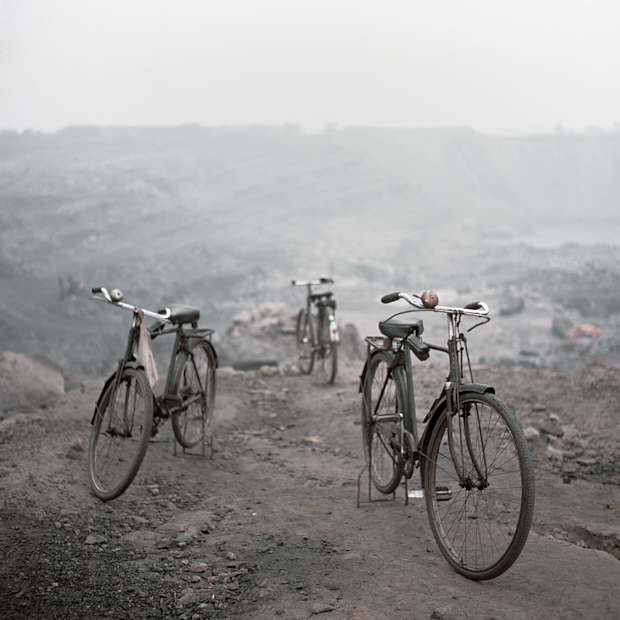
https://www.featureshoot.com/2018/09/the-realities-of-the-black-diamond-mining-communities-in-eastern-india/

This is a series of documentary photography done by Swedish photographer Sebatian Sardi. He was looking for more information regarding coal mining injuries in China, and that eventually lead him to cover India. He realized that the impact of this industry went far deeper and had affected generations of families who worked in these mines and around fires that have been burning for over 100 years. Sardi trains his eye on to the people of these hills and their living conditions. These photos are devoid of color, creating a depressed and lonely scene. The usage of such neutral colors makes the viewer  pay closer attention to the content being demonstrated along with their stories.

Tuesday, January 22, 2019

WEEK ONE

Rory Doyle DHR-06


Rory Doyle DHR-14

http://lenscratch.com/2018/12/rory-doyle-delta-hill-riders/

For the first blog, I decided on Rory Doyle His photo series Delta Hill Riders focuses on African-American cowboy culture on the Mississippi Delta. His series serves as not only a glimpse in the lives of these modern-day cowboys, but it serves as an obstructor to negative stereotypes that are often associated with young Black men. Not only does his photo series challenges prejudice and stereotypes it aims to educate its viewers on a forgotten and hidden part of American History. When we typically think of what a cowboy is "traditionally" supposed to look like we immediately think a white guy on the back of a white horse, saving some white woman. When in fact majority of cowboys where in fact black, yet for some reason America never really gave us our credit ( Gee, I wonder why?) , What I personally interpret this series as a fuck you to anyone decided to box us into certain categories, and choose to overlook and dismiss Black people when we decide to things outside of the box and discourage us from pushing boundaries. The Delta Hill Riders series shouts that not only where we the main ones living this cowboy lifestyle, but we still keep it alive and refuse to let it die.